
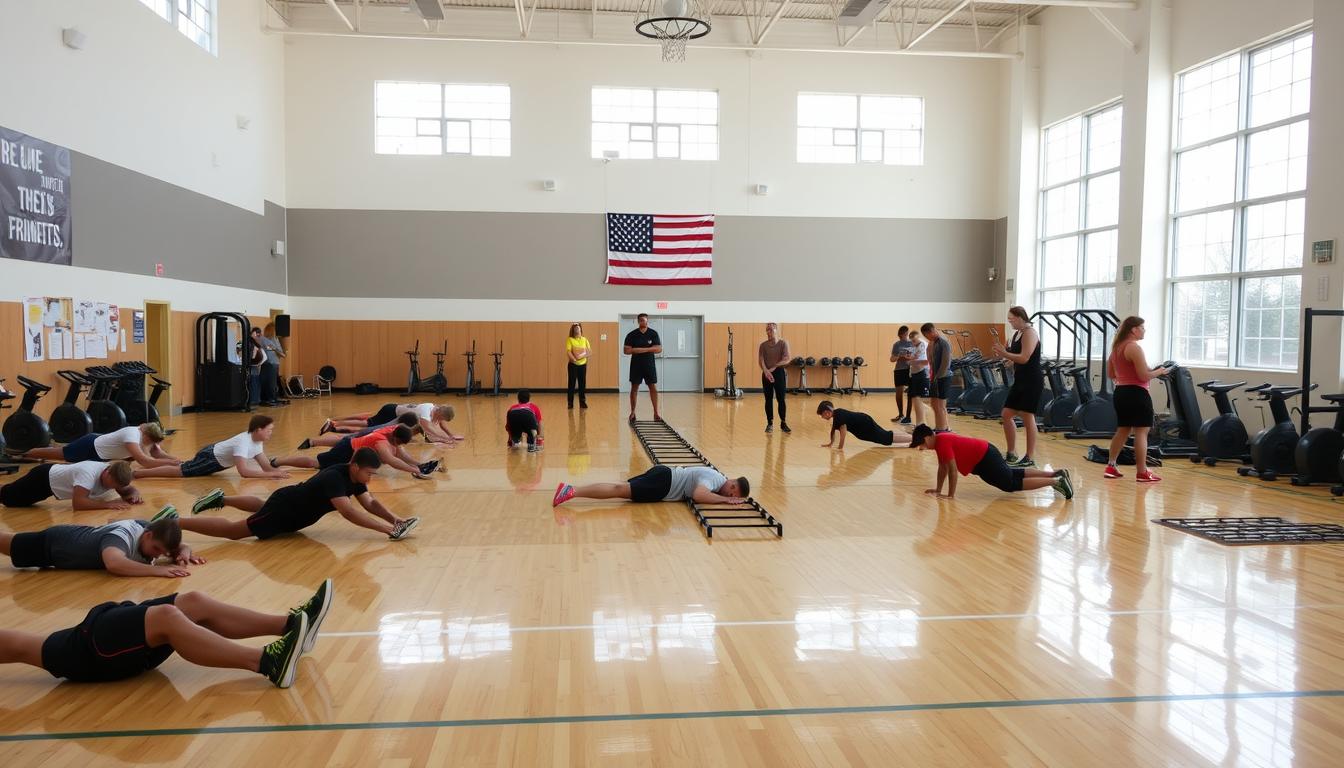
Achieving and maintaining physical fitness is crucial, especially in the military, where it’s a requirement for mission readiness. Regular testing ensures that service members are physically prepared, regardless of age or duty assignment.
Over the decades, fitness standards have evolved significantly, influencing both military and civilian health guidelines. Understanding these standards helps you assess your current fitness level and identify areas for improvement.
By knowing the benchmarks for cardiovascular endurance, muscular strength, flexibility, and body composition, you can develop a targeted approach to enhancing your overall health and wellness.
The Evolution of American Fitness Standards
American fitness standards have evolved substantially over the years, influenced by historical events and societal needs. The concept of physical fitness testing in the United States has a rich history, dating back to the late 1800s.
From Presidential Fitness Test to Modern Standards
The Presidential Fitness Test, established in the 1950s, was a landmark in standardized fitness assessment for American youth. It included exercises like pull-ups, sit-ups, and the 50-yard dash. Over time, the test evolved, and in 2012, it was replaced by the Presidential Youth Fitness Program, shifting the focus from competitive performance to overall health and wellness.
Why Fitness Standards Matter for Public Health
Fitness standards play a crucial role in public health by promoting physical activity and healthy lifestyles. Modern standards emphasize health-related components, encouraging lifelong fitness habits. These standards have expanded beyond schools to influence workplace wellness programs and public health guidelines, contributing to a healthier society.
Assessing Your Current Fitness Level
To improve your fitness, you first need to assess where you stand today. Understanding your current fitness level is crucial for setting realistic goals and creating an effective workout plan.
Key Components of Physical Fitness
A comprehensive fitness assessment involves measuring five key components: cardiovascular endurance, muscular strength, muscular endurance, flexibility, and body composition. Each of these components provides insights into different aspects of your overall fitness.
Self-Assessment Methods and Tools
Self-assessment begins with establishing your baseline in each component through standardized tests. For cardiovascular fitness, you can use the one-mile or 1.5-mile timed run test. Muscular strength and endurance can be evaluated through push-up and sit-up tests. Flexibility assessments like the sit-and-reach test help identify mobility limitations. Various mobile apps and online calculators can help you interpret your assessment results against American fitness standards.
Regular reassessment every 4-6 weeks allows you to track progress and adjust your fitness program accordingly.
Breaking Down American Fitness Standards
Understanding American fitness standards requires a look into both military and civilian fitness requirements. The fitness landscape in the United States is diverse, with different standards applying to various groups.
Military Fitness Requirements
The military has some of the most rigorous fitness standards in the country. For instance, the Army Fitness Test (AFT) is a comprehensive assessment that includes five events: 3-repetition maximum deadlift, hand-release push-ups, sprint-drag-carry, plank, and two-mile run. To pass the AFT, Soldiers must score a minimum of 60 points on each event, achieving a total score of at least 300 out of a possible 500 points. The Army fitness test is designed to evaluate physical strength, mental toughness, coordination, and flexibility, all while helping to prevent injuries.
Other branches of the military also have their own fitness tests. The Marine Corps uses both the Physical Fitness Test (PFT) and Combat Fitness Test (CFT) to assess functional strength and combat readiness. Similarly, the Navy and Air Force have their own standards that evaluate cardiovascular endurance, muscular strength, and core stability, albeit with different testing methods.
Civilian and Public Health Guidelines
For civilians, fitness guidelines are provided by organizations such as the American College of Sports Medicine (ACSM) and the Centers for Disease Control (CDC). These guidelines focus on health outcomes rather than performance metrics. The public health standards recommend at least 150 minutes of moderate aerobic activity or 75 minutes of vigorous activity weekly, coupled with strength training exercises twice a week.
Understanding these different fitness standards can help you choose appropriate benchmarks based on your personal goals and starting fitness level. Whether you’re aiming to meet military fitness requirements or simply looking to improve your overall health, knowing the standards can guide your training regimen.
Cardiovascular Fitness Benchmarks
Assessing your cardiovascular fitness level is essential for determining your overall health and fitness. Cardiovascular fitness represents your body’s ability to deliver oxygen to working muscles during sustained physical activity and is a primary indicator of overall health. Understanding your cardiovascular fitness helps determine appropriate training intensities and identifies potential health risks associated with poor aerobic capacity.
Various tests are used to measure cardiovascular fitness, with standards varying by age and gender. The two-mile run test is a common assessment method, particularly in military settings.
Two-Mile Run Standards
The two-mile run test serves as a gold standard for assessing aerobic capacity in military settings, with time standards varying by age and gender. For the Army Fitness Test, passing two-mile run times range from approximately 15:54 to 21:00 minutes for men and 18:54 to 24:00 minutes for women, depending on the age group. These standards help evaluate an individual’s aerobic fitness and endurance.
Alternative Cardio Tests and Their Metrics
Alternative cardiovascular assessments include the 1.5-mile run (used by the Navy, Air Force, and many civilian fitness tests), the 1-mile walk test, and the step test. The Cooper 12-minute run test, which measures the distance covered in 12 minutes, provides another standardized method for assessing aerobic fitness. Non-impact alternatives like the 500-yard swim test or stationary bike test accommodate individuals with joint issues while still providing valid cardiovascular assessment.
Some key metrics for these alternative tests include:
- The 1.5-mile run test, used by the Navy and Air Force, measures the time taken to complete the run.
- The Cooper 12-minute run test measures the distance covered in 12 minutes.
- The 500-yard swim test and stationary bike test offer non-impact alternatives for assessing cardiovascular fitness.
Strength and Endurance Measurements
Strength and endurance are crucial components of overall fitness, and measuring them is essential for achieving your fitness goals. Upper body strength and endurance are critical components of functional fitness, with push-ups and pull-ups serving as primary assessment tools across military and civilian standards.
Push-Ups and Pull-Ups Standards
The hand-release push-up test, used in the Army Fitness Test, requires completing as many proper form push-ups as possible in two minutes, with standards ranging from 10 to 60 repetitions based on age and gender. Pull-up standards are particularly demanding in the Marine Corps, where men must complete 3-23 pull-ups and women 1-9 pull-ups (or a flexed-arm hang) for minimum to maximum scores.
Core Strength: Sit-Ups and Planks
Core strength assessments have evolved from traditional sit-up tests to plank holds, which better evaluate functional core stability while reducing potential for lower back strain. The plank test measures how long you can maintain proper position, with minimum standards ranging from 1 minute to 3+ minutes depending on the specific standard and demographic factors.
Flexibility and Mobility Testing
Flexibility and mobility testing are vital for evaluating your body’s range of motion and identifying areas for improvement. These components of fitness are often overlooked but are crucial for enhancing performance, preventing injuries, and maintaining quality of life as you age.

Sit-and-Reach Test Guidelines
The sit-and-reach test is a standard assessment for measuring hamstring and lower back flexibility. To perform this test, you typically use a specialized box with a measurement scale. Average scores range from 14-19 inches for men and 16-21 inches for women, with higher scores indicating better flexibility. This test is essential for understanding your body’s limitations and capabilities.
Functional Mobility Assessments
Functional mobility assessments go beyond simple flexibility tests by evaluating how well your body moves through various planes of motion during practical movements. Tests like the overhead squat assessment examine multiple joint mobility by observing your position during a squat with arms extended overhead. Other assessments include the Thomas test for hip flexor mobility and the shoulder mobility test for rotation capabilities. Regular flexibility training should target major muscle groups through both static stretching and dynamic movements.
Creating Your Fitness Improvement Plan
Developing a personalized fitness plan is crucial for achieving your health and wellness objectives. To create an effective plan, you need to assess your current fitness level honestly and set realistic goals based on standardized benchmarks.
Setting Realistic Goals Based on Standards
Using the SMART goal framework (Specific, Measurable, Achievable, Relevant, Time-bound) provides a structured approach to setting fitness objectives. For instance, if you’re targeting cardiovascular improvement, you can establish progressive goals that gradually reduce your mile time or increase endurance duration by 5-10% increments.
Progressive Training Approaches
To achieve your fitness goals, it’s essential to adopt a progressive training approach. This involves systematically increasing resistance, repetitions, or decreasing rest periods while maintaining proper form. Additionally, incorporating periodization—cycling between different training intensities and focuses—can help prevent plateaus and reduce injury risk during long-term fitness improvement.
By tracking your progress through consistent measurement methods and documenting your workouts, you can identify effective strategies and maintain motivation. Moreover, adequate recovery and nutrition play equally important roles in your improvement, with sufficient protein intake, hydration, and sleep being essential components of any successful plan.
Common Challenges and How to Overcome Them
The journey to enhanced fitness is often fraught with challenges, but understanding these obstacles can help you navigate them more effectively. As you strive to meet American fitness standards, you’ll need to consider various factors that can impact your progress, including your overall health and fitness level.
Age and Gender Considerations
When it comes to fitness, age and gender play significant roles. As you progress through different life stages, your body undergoes various changes that affect your metabolism, muscle mass, and recovery capacity. Military and standardized fitness tests typically account for age through graduated standards, with performance expectations decreasing approximately 3-5% per decade after age 30. Additionally, gender-specific standards recognize physiological differences in body composition, hormonal influences, and muscle fiber distribution between men and women.
Preventing Injury While Improving Fitness
Injury prevention is crucial when working to improve your fitness level. To avoid setbacks, it’s essential to incorporate proper warm-up routines, gradual progression of intensity, attention to technique, and balanced development of opposing muscle groups into your training regimen. By being mindful of these factors, you can minimize the risk of injury and ensure a sustainable improvement in your overall fitness.
Maintaining Long-Term Fitness Success Beyond the Standards
The true measure of fitness success lies in developing habits that support overall well-being. Long-term success in fitness is not just about meeting standardized benchmarks but about adopting a lifestyle that promotes health and wellness. To achieve this, you need to transition from test-focused fitness to a more integrated approach that incorporates physical activities you enjoy.
Variety in your exercise routine is crucial to prevent burnout and ensure comprehensive fitness development. Establishing long-term fitness habits involves setting realistic goals, finding intrinsic motivation, and reassessing your objectives regularly. Community involvement and balancing structured exercise with active leisure pursuits also play a significant role in maintaining your fitness levels.
For personalized guidance on your fitness journey, consider reaching out to professionals like those at Military OneSource, who offer health and wellness coaching. By focusing on sustainable habits and a holistic approach to fitness, you can achieve lasting success and improved quality of life.






No comment