
The fitness industry is a vibrant and ever-evolving domain that encompasses a wide range of activities, products, and services aimed at promoting physical well-being and healthy lifestyles.
As you navigate this dynamic landscape, understanding the current trends is crucial for staying competitive and relevant. The global market has proven its resilience, with significant recovery post-pandemic.
In 2022, the global market was valued at $104.05 billion and is projected to reach $202.78 billion by 2030, reflecting a robust compound annual growth rate (CAGR) of 8.4%. This growth is driven by changing consumer preferences, technological advancements, and global health awareness.
Staying updated on these trends will help you leverage new opportunities, enhance fitness experiences, and achieve better health outcomes.
The State of the Global Fitness Industry in 2024
In 2024, the global fitness industry is poised for continued growth and innovation. The industry has shown remarkable resilience and recovery following the pandemic disruptions, with current valuations indicating strong upward trajectories.

The fitness industry’s expansion is driven by a combination of factors, including the push toward healthier lifestyles and advances in technology. As a result, the sector is evolving in exciting ways, with various regions experiencing different growth patterns.
Market Size and Growth Projections
The global fitness industry market was valued at $104.05 billion in 2022 and is projected to reach $202.78 billion by 2030, reflecting a robust compound annual growth rate (CAGR) of 8.4%. Some key trends driving this growth include:
- A significant increase in European memberships, which rose by 4.7 million (+7.5%) to 67.6 million by year-end 2023, surpassing pre-pandemic levels.
- A robust growth in total European revenues, reaching €31.8 billion in 2023, a +14% increase from the previous year.
- The Asia Pacific region emerging as the fastest-growing market for fitness equipment and services, with a projected CAGR of 8.1% by 2030.
The industry’s recovery has been fueled by returning in-person gym members and the retention of digital fitness subscribers. Investor confidence remains strong, with continued mergers and acquisitions activity in the traditional brick-and-mortar fitness segment. Revenue diversification has become a key strategy for fitness businesses, with many operators expanding beyond membership fees to include supplementary services and products.
Wearable Technology Dominates Fitness Tracking

As wearable technology continues to advance, its impact on the fitness industry is becoming increasingly significant. Wearable devices, such as fitness trackers and smartwatches, have become essential tools for health-conscious consumers.
The wearable technology market has evolved beyond simple step counting, now offering sophisticated metrics like heart rate variability, sleep quality analysis, and stress levels. This trend is expected to continue, with projections indicating that over 12% of the world’s population will be using fitness apps by 2027.
The integration of fitness data across multiple platforms has created unprecedented opportunities for personalized fitness experiences. Users can now access comprehensive health insights from various devices and applications, enabling a more holistic approach to their fitness journey.
Integration of Fitness Data Across Platforms
The seamless synchronization between wearables and fitness apps has created ecosystems that offer users a real-time view of their health and performance metrics. This integration enables fitness professionals to incorporate client wearable data into their training programs, allowing for more precise workout prescriptions and progress tracking.
The wearable technology market is expanding to include specialized devices for specific activities and sports, further enhancing the fitness experience. As consumer adoption of fitness trackers continues to grow globally, the industry is poised for continued innovation and growth.
Strength Training Renaissance

You’re witnessing a renaissance in strength training as people embrace its functional benefits. The fitness industry is experiencing a significant shift toward resistance-based workouts, driven by their comprehensive health benefits beyond aesthetics.
Free Weights vs. Machine Training
Free weights and machine training represent two distinct approaches to strength development. Each has unique advantages that cater to different fitness goals and experience levels.
Traditional free weight training with barbells, dumbbells, and kettlebells has gained renewed popularity for its functional benefits. It engages multiple muscle groups and develops real-world strength. On the other hand, machine-based strength training continues to offer value through guided movement patterns, increased safety for beginners, and targeted muscle isolation that complements free weight exercises.
The trend toward strength training reflects a broader shift in fitness priorities. More people are recognizing the importance of muscle mass for metabolic health, longevity, and injury prevention. Hybrid strength training approaches that combine free weights and machines are becoming increasingly common in comprehensive workout programs designed for optimal results.
Strength training has transcended its traditional bodybuilding roots to become mainstream across diverse demographics, including older adults, women, and fitness beginners. The renaissance in strength training has been supported by improved education about proper technique and programming, making these workouts more accessible to the general population.
Mind-Body Integration: Yoga, Pilates, and Core Training

As you explore the latest fitness trends, it’s clear that mind-body integration has become a cornerstone of modern exercise routines. This category includes programs designed to improve core stability, muscular endurance, mobility, coordination, and motor control through disciplines such as yoga, Pilates, and barre.
Mind-body integration programs have experienced a remarkable 27% increase in participation between 2022 and 2024, highlighting a significant shift toward holistic fitness approaches. These programs are increasingly recognized for their dual benefits of physical conditioning and mental wellness.
The 27% Rise in Balance and Flow Programs
The surge in balance and flow programs reflects a broader cultural shift toward mindfulness practices that improve both functional movement capabilities and emotional regulation. Suburban boutique studios have been primary drivers of this trend, creating specialized environments that enhance the mind-body experience.
- Mind-body integration programs have experienced a remarkable 27% increase in participation between 2022 and 2024.
- Yoga, Pilates, and core training classes are increasingly recognized for their dual benefits of physical conditioning and mental wellness.
- These mind-body modalities have demonstrated strong cross-generational appeal.
The integration of these practices into mainstream fitness programming represents the ongoing convergence of traditional fitness and wellness sectors into a more comprehensive health approach. Core stability, mobility, and coordination training have become recognized as foundational elements for overall fitness, athletic performance, and injury prevention.
Virtual and Hybrid Fitness Models

The rise of virtual and hybrid fitness models has permanently altered the fitness industry, creating new opportunities for consumers and providers alike. As a result, fitness training has become more accessible and convenient, allowing clients to engage in fitness activities from anywhere.
Several key trends have emerged in the virtual and hybrid fitness landscape:
- Virtual and hybrid fitness models have permanently transformed the industry landscape, creating new access points for consumers and revenue streams for fitness providers.
- While the initial pandemic-driven surge in online fitness has normalized, a significant portion of consumers continue to value the convenience and flexibility of virtual training options.
- The most successful fitness businesses are now operating hybrid models that seamlessly integrate in-person experiences with digital offerings, allowing members to engage on their own terms.
- Virtual fitness platforms have evolved beyond simple workout videos to create immersive, interactive experiences that foster community and accountability despite physical distance.
The Evolution of Online Training Post-Pandemic
The demand for virtual and hybrid fitness programs remains strong, offering convenience for clients. Trainers need to be proficient with digital tools, design programs for online formats, and effectively manage remote relationships. As a result, professionals can broaden their reach by offering both in-person and online services, enhancing the overall experience for their clients.
By embracing virtual and hybrid fitness models, fitness businesses can expand their market reach, increase revenue, and provide members with more flexible engagement options. As the fitness industry continues to evolve, it’s essential for businesses to adapt to the changing demands of consumers and stay ahead of the curve.
Artificial Intelligence Revolutionizing Fitness

With AI-driven fitness applications, you can now experience personalized fitness coaching like never before. Artificial intelligence is fundamentally transforming the fitness industry by enabling unprecedented levels of personalization in workout programming and nutrition guidance.
AI-driven personal training applications analyze vast amounts of user data to create adaptive fitness plans that evolve in real-time based on performance, recovery, and progress. This technology is making it possible for individuals to receive tailored fitness guidance that was previously only accessible through personal training.
AI-Driven Personal Training Applications
Machine learning algorithms are increasingly sophisticated at identifying movement patterns, correcting form, and providing feedback that previously required human trainers. The integration of AI with wearable technology creates powerful ecosystems that can monitor health metrics, predict optimal training windows, and prevent overtraining or injury.
For fitness professionals, AI tools are becoming essential for scaling their businesses, managing larger client bases, and delivering more consistent, data-driven coaching experiences. The most effective AI fitness applications balance technological innovation with human connection, recognizing that motivation and accountability still benefit from personal interaction.
Current Fitness Industry Trends Shaping Consumer Behavior
As we examine the current fitness industry trends, it becomes clear that consumer behavior is being reshaped by various factors. The fitness industry is constantly evolving, and understanding these trends is crucial for businesses to stay competitive.
“The fitness industry is becoming increasingly consumer-centric, with a focus on personalized experiences and flexible membership options,” says a recent industry report. This shift is driven by changing consumer preferences and expectations.

Membership Patterns and Retention Strategies
The data indicates that January remains the peak month for new gym memberships, with 12% of annual sign-ups occurring during this time. However, the industry faces a significant retention challenge, with 50% of new members dropping out within six months.
To address this issue, gyms are focusing on improving the onboarding experience. Research shows that 87% of members who experience positive onboarding remain active after six months. The key factors influencing membership retention are location convenience (50%), staff interactions (45%), and equipment quality (38%).
- Membership patterns show distinct seasonal variations, with January being the peak month for new sign-ups.
- Retention strategies are crucial, as 50% of new members drop out within six months.
- Positive onboarding experiences significantly improve retention rates, with 87% of members remaining active after six months.
Successful fitness businesses are responding to these trends by implementing tiered membership models, enhanced digital offerings, and community-building initiatives that increase perceived value. Gym operators are also adapting their revenue models to include secondary income streams beyond membership fees.
Inclusive Fitness: Accessibility for All
The fitness industry is shifting towards inclusivity, catering to diverse populations and abilities. This trend emphasizes creating environments where everyone feels welcome and capable, regardless of age, body type, or fitness level. As people live longer and work longer, there’s a growing demand for fitness programs that support health and physical activity across all life stages.
Inclusive fitness has emerged as a critical industry trend, with facilities and programs increasingly designed to accommodate people of all ages, abilities, body types, and fitness levels. This shift is driven by the recognition that exercise benefits individuals of all ages and body types, reinforcing the importance of creating fitness environments that are accessible and welcoming.
Programming for Older Adults
Age-inclusive programming for older adults represents a significant market opportunity, as this demographic continues to grow and seek fitness options that address their specific needs and goals. The fitness industry is recognizing that older adults have unique requirements for exercise programming, including considerations for joint health, balance, cognitive function, and social connection.
Weight-inclusive approaches are gaining traction, focusing on sustainable behaviors rather than weight as the sole indicator of health. By promoting body neutrality and self-acceptance, these approaches address health conditions without stigma, supporting overall health and well-being for individuals of all sizes.
As the industry continues to evolve, it’s crucial to prioritize accessibility and inclusivity in fitness programming and facilities. By doing so, we can create a more inclusive environment that supports the diverse needs of the population, promoting a culture of health fitness for all.
Recovery and Wellness Integration

Recovery and wellness are no longer just for elite athletes; they’re now a mainstream priority for anyone serious about their fitness journey. As you intensify your workouts, incorporating effective recovery strategies becomes crucial for enhancing performance and overall health.
The fitness industry is witnessing a significant shift towards viewing recovery as an active process rather than just the absence of training. This change is driven by the growing awareness of the importance of physiological restoration and adaptation in achieving fitness goals.
Popular recovery tools and techniques are becoming essential components of comprehensive training programs. These include foam rollers, percussion massage devices, compression garments, and cryotherapy, which are now standard offerings in forward-thinking fitness facilities.
Recovery Tools and Techniques
Recovery strategies such as foam rolling, massage guns, compression gear, cold therapy, and saunas are thought to reduce muscle soreness, speed up recovery times, and improve performance. Exercise professionals can discuss different recovery strategies with their clients, emphasizing the importance of rest and restoration for both physical and mental health.
- Recovery and Wellness Integration has evolved from a niche concern for elite athletes to a mainstream fitness priority.
- The fitness industry is shifting towards viewing recovery as an active process with specialized modalities.
- Popular recovery tools include foam rollers, percussion massage devices, and cryotherapy.
- The science of recovery is advancing rapidly, with research on the efficacy of various modalities.
- Sleep optimization and stress management are foundational elements of effective recovery.
- Wellness services like meditation and relaxation techniques are being incorporated into training approaches.
- The recovery trend represents a shift towards sustainable fitness practices prioritizing long-term health.
By integrating recovery and wellness into your fitness routine, you can enhance your overall performance, reduce the risk of overtraining, and promote long-term health and well-being.
Outdoor and Nature-Based Fitness Activities
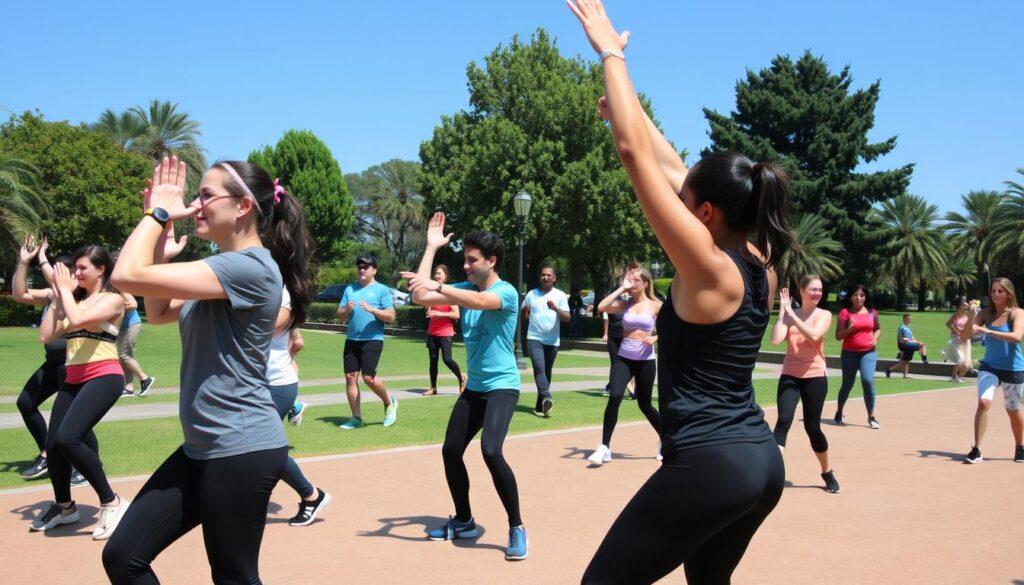
With the growing desire for varied workout experiences, outdoor and nature-based fitness activities are on the rise. People are turning to outdoor fitness activities to stay healthy and enjoy the natural environment. The gym is no longer the only place to work out; outdoor spaces are becoming increasingly popular for workouts.
Outdoor activities, including group walks, bike rides, and hikes, have seen a significant upswing, possibly driven by the COVID-19 restrictions and the desire for open-air experiences. Participants gather in local parks, hiking areas, or bike trails, often led by designated leaders. This trend has continued post-pandemic, with many discovering the physical and mental health benefits of exercising in natural environments.
Rising Popularity of Group Outdoor Training
Group outdoor training has emerged as a particularly popular format, combining the social connection of group fitness with the refreshing experience of being in nature. Many traditional gyms are expanding their offerings to include outdoor programming, recognizing that members value the variety and environmental benefits of outdoor workouts.
The benefits of outdoor fitness activities are numerous, with research supporting the additional psychological benefits of “green exercise.” Studies show enhanced mood, reduced stress, and improved cognitive function when exercising outdoors. As a result, outdoor fitness activities are becoming a staple in many fitness routines.
Preparing Your Fitness Journey for Future Trends
As you look to the future of your fitness journey, it’s essential to stay informed about the evolving trends in the fitness industry. The trends shaping 2025 reflect a continued evolution toward inclusivity, personalization, and holistic health. By embracing these shifts, exercise professionals and health coaches can remain at the forefront of the industry, delivering safe, effective, and innovative solutions that empower individuals to lead healthier lives.
To prepare for the future, consider the following key trends: the convergence of technology and fitness will accelerate, making digital literacy crucial; strength training will remain foundational, with an emphasis on longevity and metabolic health; and mental health considerations will become more integrated with physical fitness. Additionally, fitness professionals should develop inclusive programming skills to address diverse client populations.
The fitness industry will continue to grow, driven by increasing demand for personalized and convenient workouts. As a result, gyms and fitness businesses must leverage data effectively while maintaining human connection. Recovery and regenerative practices will gain importance as essential components of comprehensive fitness programming. By understanding these trends and adapting to the changing landscape, you can ensure a successful fitness journey over the coming years.
Ultimately, the key to thriving in the fitness industry is to develop a growth mindset that views change as an opportunity. By selectively adopting innovations that align with your core values and goals, you can stay ahead of the curve and achieve long-term success in the ever-evolving world of fitness.

No comment