Embarking on a career as a certified personal trainer can be a rewarding and stable profession, even in the face of advancing technology. As you consider this path, it’s essential to understand the process and benefits of becoming certified.
To become certified, you’ll need to navigate through various certification options available for aspiring personal trainers. This guide will walk you through the educational requirements, exam processes, and career opportunities that await certified professionals in the fitness industry.
By understanding the certification landscape, you’ll be well on your way to becoming a qualified professional who can help others achieve their health and wellness goals, launching a successful career in the process.
The Growing Demand for Certified Fitness Trainers
In today’s fitness-conscious society, becoming a certified personal trainer can be a rewarding and in-demand career choice. The fitness industry is experiencing significant growth, driven by an increased focus on health and wellness.
Why Fitness Training Remains Future-Proof in the Age of AI
Despite the rise of AI and automated fitness solutions, careers requiring human connection, empathy, and specialized expertise, like personal training, remain resilient. Certifications from reputable organizations like ISSA equip trainers with practical skills and recognized credentials that set them apart in an AI-disrupted job market.
Current Job Market Statistics for Personal Trainers
The job market for personal trainers is thriving, with over 70,000 open positions in the U.S. today. Key statistics include:
- The personal training sector is projected to grow 15% through 2029, outpacing the average for all occupations.
- Diverse employment models are available, from traditional gym employment to independent contracting and online coaching.
- Certified professionals command higher rates than their non-certified counterparts, with median salaries continuing to rise.
To achieve success in this competitive job market, it’s crucial to have recognized certifications that validate your expertise and commitment to professional standards.
Understanding Fitness Trainer Certification
Fitness trainer certification is a crucial credential that validates your expertise and commitment to the profession. As you consider your career path, understanding what certification entails and its significance in the fitness industry is essential.
Why Certification Matters in the Fitness Industry
Certification matters because it ensures that you have the necessary knowledge and skills to provide safe and effective training to your clients. A certified personal trainer has demonstrated a level of competence that is recognized industry-wide. This not only enhances your credibility but also opens up more career opportunities.
Employers and clients alike prefer certified trainers, as it gives them confidence in the trainer’s ability to design and lead workout programs that meet their needs and goals.
Accreditation Standards: NCCA and Other Governing Bodies
The National Commission for Certifying Agencies (NCCA) is the gold standard for certification program accreditation in the fitness industry. NCCA accreditation signifies that a certification program meets rigorous standards for development, implementation, and maintenance. When choosing a personal trainer certification program, look for NCCA accreditation as a primary consideration.
- The NCCA ensures that certification programs adhere to high standards.
- Other important accrediting bodies include the Distance Education Accrediting Commission (DEAC) and the American National Standards Institute (ANSI).
- Accredited certifications undergo regular reviews to stay current with industry best practices.
Understanding these requirements and standards helps you make an informed decision when selecting a certification program that aligns with your career goals.
Prerequisites for Becoming a Certified Fitness Trainer
The path to certification in fitness training begins with understanding the necessary prerequisites. To become a certified fitness trainer, you must fulfill specific requirements that ensure you’re adequately prepared for the role.
Educational Requirements
Most certification programs require a high school diploma or equivalent. Some may have additional educational requirements, so it’s essential to check the specific prerequisites for the certification you’re interested in. Having a background in fitness or a related field can be advantageous.
CPR/AED Certification Requirements
A current CPR/AED certification is mandatory for taking the NSCA-CPT exam. This requirement ensures that you have the necessary skills to respond to emergencies. It’s crucial to maintain your CPR/AED certification throughout your career as a fitness trainer.
Physical Fitness and Experience Considerations
While there are no specific fitness testing requirements, having personal training experience is invaluable. Your personal fitness journey and experience with various training modalities help you understand client challenges and develop effective training programs. Familiarity with gym environments and equipment operation is also essential for safe program design. Understanding the needs of your clients is crucial for success in this field.
Top Fitness Trainer Certification Programs Compared
When it comes to becoming a certified fitness trainer, choosing the right certification program is crucial for your career success. With numerous options available, comparing top programs can help you make an informed decision.
NSCA-CPT: National Strength and Conditioning Association
The NSCA-CPT certification is designed for those who want to specialize in strength and conditioning. This program is ideal for trainers who wish to work with athletes or individuals looking to improve their strength and performance. The NSCA-CPT exam tests your knowledge of strength and conditioning principles, as well as your ability to design safe and effective training programs.
ACE: American Council on Exercise
ACE is one of the most recognized names in the fitness industry, offering a comprehensive personal trainer certification that covers a wide range of topics, from exercise science to program design. The ACE exam is designed to test your understanding of how to conduct client assessments, create workout plans, and provide ongoing support to clients. ACE certification is well-respected and can open doors to various career opportunities in the fitness industry.
ISSA: International Sports Sciences Association
The ISSA offers a fully online certification process, making it accessible to candidates worldwide. ISSA distinguishes itself with a unique job guarantee program, providing added security for those investing in their certification. The ISSA exam follows an open-book format, focusing on practical application of knowledge rather than memorization. ISSA’s program places a strong emphasis on the business aspects of personal training, preparing candidates for entrepreneurial success.
- The certification includes specialized sections on nutrition coaching.
- ISSA provides lifetime access to study materials.
- The exam format includes multiple-choice questions, case studies, and program design assignments.
- ISSA offers numerous specialization certifications that can be bundled with the personal trainer certification.
Each of these certification programs has its unique strengths and can cater to different career goals. Whether you’re interested in strength and conditioning with NSCA-CPT, comprehensive personal training with ACE, or the flexible and practical approach of ISSA, there’s a certification that can help you achieve your career aspirations.
Certification Costs and Study Program Options
When pursuing a fitness trainer certification, understanding the costs and study program options is crucial. As you prepare for your certification exam, you’ll need to consider both the financial investment and the study materials that best suit your learning style.
Tuition and Exam Fees Breakdown
The costs associated with fitness trainer certification can vary significantly depending on the certifying organization and the specific program you choose. For instance, the ACE Personal Trainer certification program includes various study materials and exam fees, which can range widely in cost. Understanding these expenses upfront is essential for budgeting your certification journey.
Self-Study vs. Guided Programs
You have the option to choose between self-study programs and guided study programs. Self-study allows for flexibility in your learning schedule, while guided programs offer structured learning with instructor support. Your choice depends on your personal learning preferences and study habits.
Digital vs. Physical Study Materials
The choice between digital and physical study materials depends on your learning style. Digital materials, such as eBooks and online platforms, offer searchability and multimedia integration, enhancing your learning experience. On the other hand, physical textbooks provide tangibility and cognitive benefits. Many certification programs, like ACE, offer both formats for their textbook, “The Exercise Professional’s Guide to Personal Training,” available as a digital eBook, hardcopy, or audiobook.
Preparing for Your Fitness Trainer Certification Exam

Preparing for your fitness trainer certification exam requires a strategic approach to studying and a thorough understanding of the exam content. To succeed, you need to be well-versed in various aspects of fitness training, including program design, exercise techniques, and client assessment.
Effective Study Strategies and Timelines
Developing an effective study plan is crucial. Allocate sufficient time to cover all the necessary material, focusing on areas that carry the most weight in the exam. Understanding knowledge domains such as functional anatomy, exercise physiology, and client assessment protocols will form a solid foundation.
Practice Tests and Exam Simulations
Practice tests and exam simulations are invaluable tools. They help you familiarize yourself with the exam format, identify areas for improvement, and build your test-taking skills. Regular practice will also boost your confidence.
Common Exam Topics and Knowledge Areas
The certification exam typically covers four to six major knowledge domains, with a significant emphasis on program design and exercise technique. Key areas include:
- Client consultation and assessment protocols
- Exercise technique and safety considerations
- Program design based on client objectives
- Special populations and modifications
- Professional responsibilities and ethics
By focusing on these areas and honing your skills, you’ll be well-prepared to pass your fitness trainer certification exam.
The Certification Exam Process
As you prepare for your fitness trainer certification, understanding the exam process is crucial. The certification exam is a comprehensive assessment that evaluates your knowledge and skills in fitness training.
In-Person vs. Remote Proctored Exams
You have the option to take your certification exam either in-person or through remote proctoring. Both methods offer flexibility and security. The ACE Certified Personal Trainer Exam, for example, provides an in-person or online, live proctored exam. This flexibility allows you to choose the method that best suits your needs and comfort level.

What to Expect on Exam Day
On the day of your exam, you’ll need to be prepared. Here are some key things to expect:
- The exam typically consists of 120-150 multiple-choice questions to be completed within a 3-hour time frame.
- You’ll need to present valid government-issued photo identification that matches your registration information.
- Personal items, including phones and notes, are prohibited in the testing area.
- The exam will begin with a brief tutorial on the testing interface, which doesn’t count against your allotted time.
By understanding what to expect on exam day, you’ll be better prepared to succeed in your certification exam.
Career Opportunities with Your Fitness Trainer Certification

With your fitness trainer certification, you’re poised to explore a variety of career paths. As a certified personal trainer, you have the opportunity to work in different settings, from commercial gyms to private training businesses.
Commercial Gym and Fitness Center Positions
Working in commercial gyms and fitness centers is a traditional path for certified personal trainers. These environments offer a steady stream of potential clients and the support of a larger facility. Trainers can build their client base and develop their training programs within these settings.
Corporate Wellness Programs
Corporate wellness programs represent a growing area of opportunity for certified fitness trainers. Many companies are now investing in employee wellness initiatives, creating demand for trainers who can develop and lead workplace fitness programs. The NSCA-CPT certification is often preferred for roles such as Wellness Program Coordinator or Consultant.
Entrepreneurial Opportunities and Private Training
For those with an entrepreneurial spirit, private training offers significant potential. Independent personal training can offer higher earning potential than traditional gym employment. Successful private trainers develop specialized niches and build strong client relationships. They must also manage the business aspects of their practice, including marketing and client acquisition.
Whether you choose to work in a commercial gym, develop corporate wellness programs, or build a private training business, your fitness trainer certification provides a solid foundation for a rewarding career.
Specialization Paths to Enhance Your Fitness Career
As you advance in your fitness career, considering specialization paths can significantly enhance your professional opportunities. Specialized training programs allow you to develop expertise in specific areas, making you more attractive to potential clients and employers.
Senior Fitness and Active Aging
Focusing on senior fitness and active aging can be a rewarding specialization. This involves designing exercise programs for older adults, taking into account their unique needs and health considerations. By obtaining specialized certification in this area, you can cater to the growing demographic of seniors looking to maintain their health and independence.
Sports Performance and Athletic Training
Another lucrative specialization is sports performance and athletic training. This path involves working with athletes to improve their performance through tailored training programs. Professionals in this field often work closely with sports teams or individual athletes, requiring a deep understanding of athletic needs and performance enhancement techniques.
Medical Exercise and Rehabilitation
Medical exercise specialization bridges the gap between physical therapy and fitness training, working with clients managing chronic conditions or recovering from injuries. This career path typically requires additional certification in corrective exercise, post-rehabilitation, or specific clinical populations. Medical exercise specialists develop expertise in conditions including diabetes, cardiovascular disease, cancer, neurological disorders, and post-surgical rehabilitation, offering a challenging yet rewarding career path in health and wellness.
Maintaining Your Fitness Trainer Certification
Maintaining your fitness trainer certification involves a combination of continuing education and administrative tasks. As a certified professional, you must stay updated with the latest industry developments and adhere to the certification renewal cycles.
Continuing Education Requirements
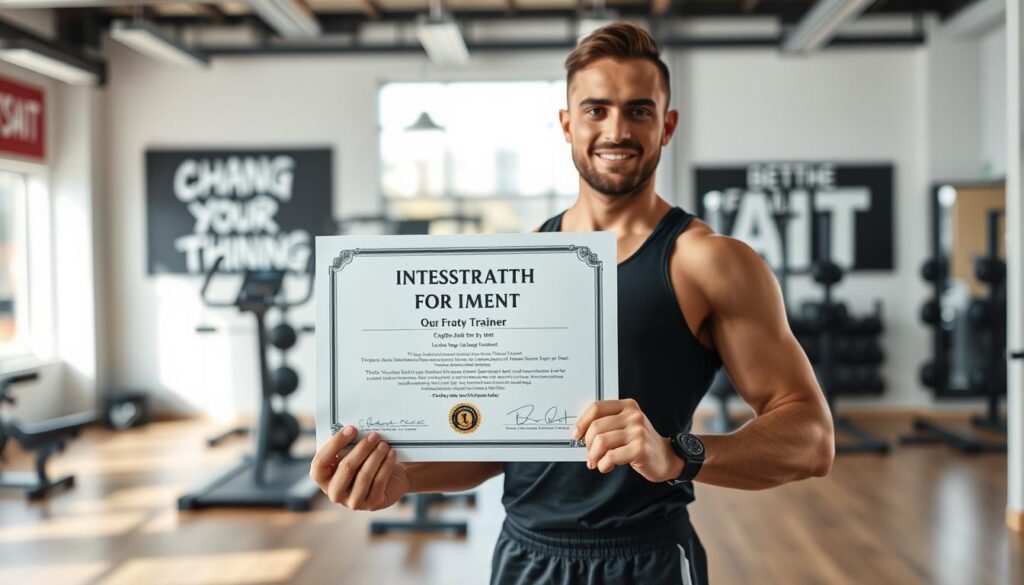
To maintain your certification, you need to complete continuing education units (CEUs) as required by your certifying organization. Most organizations offer online portals to track your CEUs throughout your certification period, simplifying the recertification process. For instance, the NSCA acknowledges certified individuals who volunteer and contribute significantly to the field through “Recertifying with Distinction.”
Recertification Processes and Timelines
Certification renewal cycles typically operate on 2-3 years timelines. The NSCA requires recertification every three years, while ACE requires it every two. The process involves documenting completed continuing education, paying renewal fees, and maintaining current CPR/AED certification. Early renewal discounts are commonly available, and some organizations offer lifetime certification status after 20+ years of maintaining the credential.
Taking the First Step Toward Your Fitness Training Career
Turning your passion for fitness into a career requires dedication, the right certification, and a clear vision. As you begin your journey, it’s essential to start with honest self-assessment of your goals, strengths, and the specific population you feel called to serve.
To ensure a successful start, consider the following key steps:
- Research certification options thoroughly to align with your career objectives.
- Create a realistic timeline and budget for certification preparation.
- Gain practical experience through volunteer opportunities or internships.
- Develop a career vision that extends beyond certification.
By taking decisive action today, you transform your aspirations into tangible progress toward your personal training career goals. Many have found that certification programs like NSCA-CPT or ACE have transformed their life and helped them achieve a fulfilling career in fitness, enabling them to make a meaningful impact on others’ lives through personal training.






No comment