
Improving your body’s range of motion and joint mobility is crucial for overall fitness and health. Flexibility training is often overlooked, yet it plays a significant role in enhancing physical capabilities and contributing to better long-term health outcomes.
By incorporating flexibility exercises into your routine, you can improve your posture, prevent injuries, and enhance your everyday movement quality. Understanding the science behind flexibility helps you appreciate its complementary role to strength training and cardiovascular exercise.
This guide will explore how to unlock the full potential of flexibility for enhanced performance in both athletic pursuits and daily activities, ultimately contributing to a healthier body and improved overall fitness.
Understanding Flexibility and Why It Matters
Understanding flexibility is key to unlocking better physical performance and health. Flexibility refers to the range of motion in a joint or series of joints, and it’s crucial for maintaining mobility and preventing injuries. As you age, your flexibility can change due to various factors.
What Is Flexibility Training?
Flexibility training involves exercises designed to improve the range of motion and reduce stiffness in the muscles and joints. This type of training can include various stretching techniques, such as static, dynamic, and PNF stretching. By incorporating flexibility exercises into your routine, you can enhance your overall mobility and reduce the risk of injury. Regular flexibility training can also improve your posture and balance.
How Flexibility Changes with Age and Lifestyle
Losing flexibility over time can be attributed to a combination of factors, including aging, lifestyle choices, and physical activity levels. As people age, natural aging processes contribute to decreased flexibility. Modern sedentary lifestyles, particularly prolonged sitting, significantly accelerate flexibility loss. Your daily movement patterns, stress levels, previous injuries, and genetic factors also play a role in determining your flexibility. Understanding these factors can help you create a more targeted and effective flexibility training approach.
The Key Flexibility Training Benefits for Overall Health
The benefits of flexibility training extend far beyond just physical flexibility, impacting overall health in profound ways. By incorporating flexibility exercises into your routine, you can experience a range of benefits that enhance your overall wellbeing.
Improved Range of Motion and Mobility
Flexibility training is crucial for maintaining a good range of motion and mobility. As we age, our flexibility naturally decreases, but regular stretching can help counteract this effect. Improved flexibility allows for more effortless movement, making daily activities easier and less straining. According to research, flexibility training can significantly enhance mobility, contributing to a more active and independent lifestyle.
Reduced Risk of Injuries
One of the significant benefits of flexibility training is the reduced risk of injuries. When your muscles are flexible, they are less likely to strain or tear during physical activity. Flexibility training prepares your muscles for the demands of exercise, reducing the risk of injury and allowing for more intense and effective workouts. This is particularly important for athletes or individuals who engage in strenuous physical activities.
Better Posture and Balance
Flexibility training also plays a crucial role in improving posture and balance. As noted in various studies, flexibility exercises can target specific muscle groups that contribute to poor posture, such as the chest, shoulders, hip flexors, and hamstrings. Better posture not only enhances physical appearance but also reduces unnecessary strain on the musculoskeletal system, potentially alleviating chronic pain. Moreover, improved flexibility can lead to better balance, significantly reducing the risk of falls, especially in older adults. Regular flexibility training can improve proprioception and neuromuscular coordination, essential components of good balance.
As a study found, participating in a flexibility training program can lead to improved posture and quality of movement. Another research highlighted that students with poor posture and musculoskeletal pain saw improvements in pain symptoms and posture after following an exercise program that included stretching and flexibility exercises. “Regularly practicing yoga can be beneficial, leading to better overall balance,” as supported by research. This underscores the importance of incorporating flexibility training into your routine for overall health benefits.
How Flexibility Training Enhances Physical Performance
Flexibility training is a crucial component of overall fitness that directly impacts your physical performance. By enhancing your flexibility, you can experience improvements in various aspects of your physical ability, from strength and muscle function to overall athletic performance.
Increased Strength and Muscle Function
Flexibility training contributes to increased strength and muscle function by allowing for a greater range of motion and more effective muscle recruitment patterns. This means that your muscles can work more efficiently, leading to improved overall muscle function. Regular flexibility exercises can also enhance neuromuscular coordination, which is essential for optimal strength and performance.
Dynamic stretches, in particular, prepare your muscles for the upcoming activity by increasing blood flow and temperature, thereby improving muscle elasticity and reducing the risk of injury.
Enhanced Athletic Performance
For athletes, flexibility training is key to enhanced athletic performance. It allows for more powerful movements and better technique execution in sports. For instance, sports that require extensive range of motion, such as gymnastics, martial arts, and dance, benefit significantly from strategic flexibility training. Moreover, dynamic flexibility exercises as part of a warm-up routine have been shown to enhance running economy in endurance athletes.
Proper flexibility in sport-specific muscle groups enables athletes to achieve optimal positioning for power generation and technique execution. Additionally, flexibility training aids in maintaining better body control during complex movements, which is particularly important in sports requiring precision.
Types of Stretching for Optimal Flexibility
To achieve optimal flexibility, it’s essential to understand the various stretching techniques available. Different stretching methods can be used to improve flexibility, and incorporating a mix of these into your routine can help you achieve better overall fitness.
Static Stretching
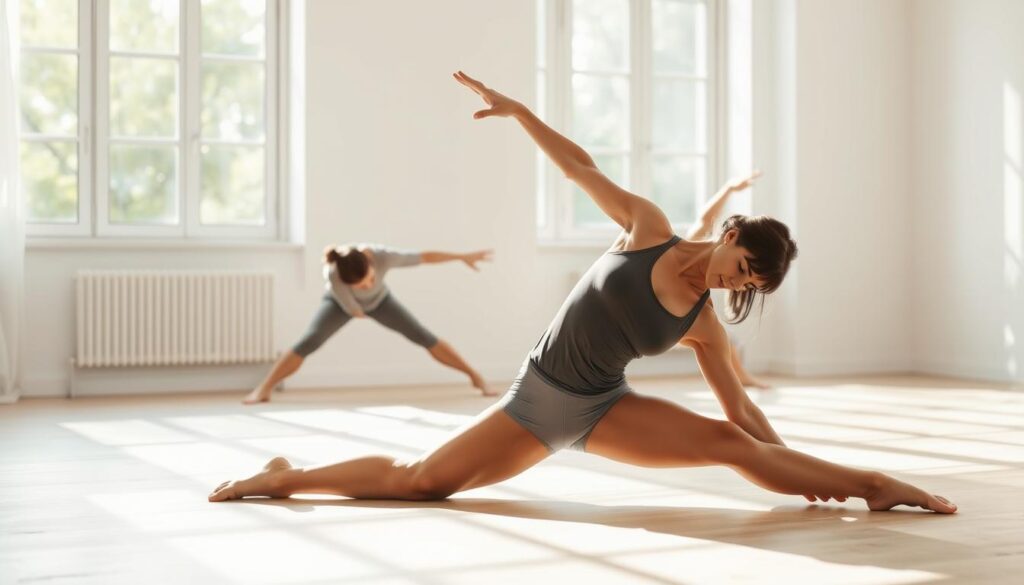
Static stretching involves holding a stretch for a period of time, usually 15-30 seconds. This method is effective for improving flexibility by allowing the muscle to relax and lengthen. Static stretching is commonly used after workouts to help improve range of motion and reduce muscle soreness.
Dynamic Stretching
Dynamic stretching involves moving your joints through a range of motion while keeping your muscles active. This type of stretching is particularly useful before workouts or athletic events as it helps prepare the muscles for movement and can improve performance.
PNF and Passive Stretching Techniques
PNF (Proprioceptive Neuromuscular Facilitation) stretching involves contracting and then relaxing specific muscle groups to improve flexibility. Passive stretching, on the other hand, involves using an external force (such as a partner or equipment) to deepen a stretch. Both methods can be effective for improving flexibility, especially when combined with other stretching techniques.
Ballistic Stretching: Benefits and Cautions
Ballistic stretching uses momentum and bouncing movements to push a muscle beyond its normal range of motion. While it can improve dynamic flexibility and enhance neuromuscular coordination, it also carries a higher risk of injury, particularly for beginners. As noted by fitness professionals, “ballistic stretching should only be done after thorough warm-up and with proper progression from more controlled stretching methods.” If you’re considering incorporating ballistic stretching into your routine, it’s crucial to weigh the potential benefits against the risks.
In conclusion, understanding the different types of stretching techniques can help you create a well-rounded flexibility training program. By incorporating a mix of static, dynamic, PNF, passive, and potentially ballistic stretching, you can improve your overall flexibility and enhance your athletic performance.
Essential Flexibility Exercises for Your Routine
For a comprehensive flexibility training program, it’s essential to understand the key exercises that yield the best results. Incorporating a variety of stretches and movements into your routine can significantly enhance your overall flexibility.
Lower Body Stretches
Lower body stretches are crucial for improving flexibility in your legs and hips. These stretches can help reduce the risk of injury and enhance athletic performance.
Hamstring and Hip Flexor Stretches
Hamstring stretches involve lengthening the muscles at the back of your thighs, while hip flexor stretches target the muscles at the front of your hips. Both are essential for maintaining flexibility and preventing strain.
Calf and Ankle Mobility Exercises
Exercises that improve calf and ankle mobility are vital for overall lower body flexibility. These can include calf raises and ankle rotations, which help in maintaining a full range of motion.
Upper Body and Core Flexibility
Upper body and core flexibility exercises are equally important, as they improve your posture, reduce muscle tension, and enhance overall mobility.
Shoulder and Chest Openers
Shoulder and chest openers are designed to improve flexibility in your upper body. These stretches can help counteract the effects of poor posture and reduce discomfort.
Back and Spine Mobility Exercises
Back and spine mobility exercises are crucial for maintaining a healthy spine and improving overall flexibility. These can include various yoga poses and spinal rotations.
Full-Body Flexibility Movements
Full-body flexibility movements integrate multiple muscle groups and joints, providing a comprehensive approach to flexibility training. Examples include Sun Salutations and other flowing yoga sequences.
Sun Salutations, or Surya Namaskar, is a series of movements that flow together to stretch and strengthen various muscle groups. By incorporating these into your routine, you can improve your overall flexibility and coordination.
Other beneficial full-body movements include dynamic stretches and yoga flows that engage multiple joints and muscle groups simultaneously. These exercises not only improve flexibility but also enhance functional fitness and overall well-being.
Creating Your Personalized Flexibility Training Plan
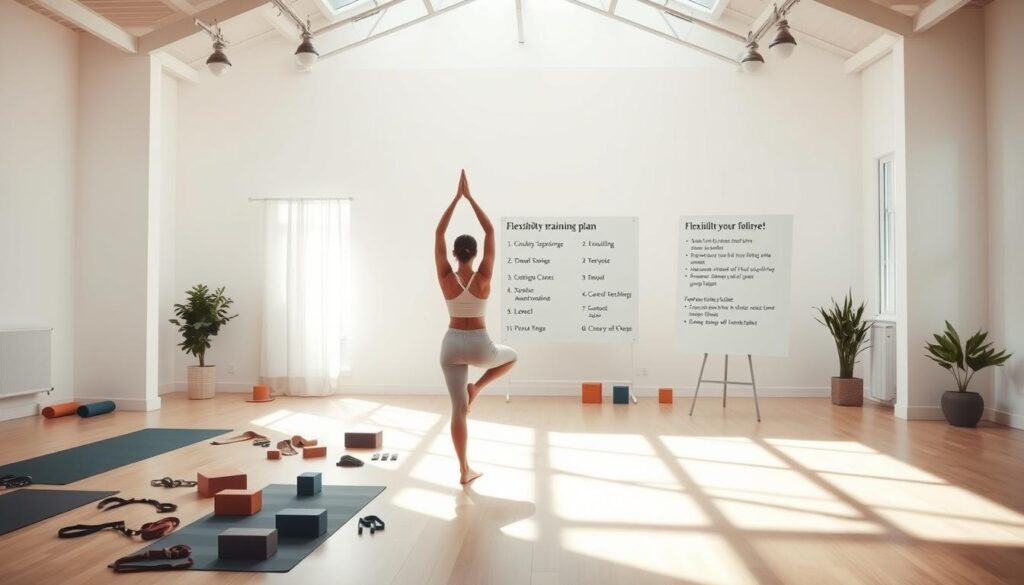
To maximize the benefits of flexibility training, it’s crucial to create a personalized plan that suits your lifestyle and fitness goals. This involves understanding how often to train, how to incorporate flexibility exercises into your existing workout routine, and how to track your progress effectively.
How Often to Train for Flexibility
The frequency of flexibility training depends on your current level of flexibility and your goals. Ideally, you should aim to stretch at least 2-3 times a week, with a minimum of 10-15 minutes per session. Consistency is key, so try to incorporate stretching into your daily routine, even if it’s just for a few minutes. As you progress, you can increase the frequency or duration of your stretching sessions.
Incorporating Flexibility into Your Existing Workout Routine
An ideal time to stretch is after your workout, during your cool-down phase, when your muscles are warm. This can help improve flexibility and reduce muscle soreness. You can also incorporate dynamic stretches into your warm-up routine to prepare your muscles for exercise. For example, doing leg swings or arm circles can help increase blood flow and range of motion. Remember to breathe throughout your stretching to ensure a continuous oxygen supply to your muscles.
Tracking Your Flexibility Progress
Measuring your flexibility progress is essential for staying motivated and adjusting your training plan as needed. You can use simple assessments like the sit-and-reach test or track how far you can reach in specific stretches. Keeping a flexibility journal can also help you note changes in your range of motion and identify patterns. “Set specific, measurable flexibility goals rather than vague targets,” such as aiming to touch your toes with straight legs. Reassess your flexibility metrics every 4-6 weeks to adjust your routine based on areas of progress and those needing more attention.
Beyond Physical Benefits: How Flexibility Training Improves Your Wellbeing
By embracing flexibility exercises, you can experience a profound impact on your overall health and wellbeing. Regularly engaging in poses that stretch and open up your body can bring about feelings of relaxation, extending the physical benefits to a relaxed state of mind.
Flexibility training creates a unique mind-body connection, reducing stress hormones and promoting relaxation. Many people experience significant pain reduction, improving mood and quality of life. As you achieve new flexibility milestones, you’ll build confidence that can extend to other areas of your life, leading to better overall health.
With regular flexibility work, you’re likely to experience fewer aches and pains, and be less likely to experience muscle cramps. This holistic approach to exercise makes it one of the most accessible and sustainable forms of exercise for lifelong health, enhancing your overall wellbeing and reducing stress.






No comment