
You’ve likely heard that regular exercise is crucial for maintaining good health and fitness. According to the Physical Activity Guidelines for Americans, adults should aim for 150 to 300 minutes of moderate physical activity per week.
Engaging in cardio activities is an excellent way to achieve this goal, as it can be done almost anywhere, from the comfort of your home to public parks or outdoor spaces. The intensity of your cardio routine can be adjusted based on your current fitness level, making it accessible to everyone.
By incorporating cardio into your routine, you’ll not only improve your heart function and increase your heart rate, but you’ll also be taking a significant step towards achieving your overall health and fitness goals. Various exercises will be covered in this article, providing you with the tools to find the right cardio routine for your needs.
The Importance of Cardiovascular Exercise for Overall Health
The importance of cardiovascular exercise cannot be overstated when it comes to overall health. Cardiovascular exercise, or cardio, is any activity that gets your heart rate up and keeps it elevated for a prolonged period. This type of exercise is crucial for maintaining a healthy cardiovascular system, improving circulation, and boosting overall well-being.
So, what makes an exercise “cardiovascular”? It’s defined by its ability to elevate your heart rate and increase oxygen consumption. During cardio, your respiratory system works harder as you breathe faster and more deeply. Blood vessels expand to bring more oxygen to your muscles, and your body releases endorphins, which are natural mood-boosters.
What Makes an Exercise “Cardiovascular”
Cardio exercises are those that raise your heart rate and sustain it over time. Examples include running, cycling, and swimming. These activities challenge your heart and lungs, improving cardiovascular health.
Recommended Amount of Cardio Per Week
The CDC recommends at least 150 minutes of moderate-intensity cardio per week. This can be broken down into 30 minutes per day, five days a week. For those looking to lose weight or maintain weight loss, increasing the duration or intensity is necessary.
Measuring Exercise Intensity
Exercise intensity can be measured using the Rate of Perceived Exertion (RPE) scale, heart rate monitoring, or the talk test. The RPE scale assesses how hard you feel you’re working, while heart rate monitoring measures your pulse. The talk test gauges intensity based on your ability to hold a conversation during exercise.
Health Benefits of Regular Cardiovascular Workouts
Engaging in regular cardiovascular workouts can significantly enhance your overall health and wellbeing. Cardiovascular exercise is a cornerstone of a healthy lifestyle, providing numerous benefits that impact both body and mind.
Improved Heart and Lung Function
Regular cardio workouts strengthen your heart muscle, improving its efficiency in pumping blood throughout your body. This enhancement in cardiac function is accompanied by improvements in lung capacity, allowing for better oxygen intake and distribution.
Weight Management and Calorie Burning
Cardiovascular exercise plays a crucial role in weight management by burning calories and boosting your metabolic rate. Regular cardio sessions help maintain a healthy body weight, reducing the risk of obesity-related conditions.
Mental Health and Mood Enhancement
The benefits of cardio workouts extend to mental health, with the release of endorphins contributing to improved mood and reduced stress levels. Regular cardiovascular exercise can help alleviate symptoms of anxiety and depression.
Disease Prevention and Longevity
Engaging in regular cardio workouts has been shown to reduce the risk of developing major diseases, including heart disease, diabetes, and certain cancers. Studies have found that higher cardiorespiratory fitness is associated with lower risks of conditions like high blood pressure, stroke, and dementia.
Beginner-Friendly Cardiovascular Workouts
Embarking on a cardiovascular fitness journey is more accessible than ever with beginner-friendly workouts. These exercises are designed to be easy to follow, requiring minimal equipment, and can be adapted to various fitness levels.
Walking and Power Walking
Walking is an excellent starting point for cardiovascular exercise. Even a 10-minute walk can improve heart health. To enhance your walking routine, try power walking by increasing your pace and stride length. This simple adjustment can significantly boost your cardiovascular benefits.
Marching in Place
Marching in place is another effective cardio exercise that’s easy to do at home. Maintain proper posture, lift your knees to varying heights, and swing your arms to maximize the cardiovascular benefit.
Dancing to Music
Dancing to your favorite upbeat music can be a fun way to get your heart rate up and burn calories. Choose a playlist that motivates you and follow simple dance moves or freestyle.
Basic Arm and Leg Movements
Basic arm and leg movements, such as arm circles and leg lifts, can be performed while sitting or standing. These movements are ideal for all skill levels and can be combined for an effective beginner cardio routine.

For beginners, starting with short sessions (10-15 minutes) and gradually increasing duration and frequency is recommended. Monitoring your progress and adjusting your routine accordingly will help you advance to more challenging exercises.
Intermediate Cardiovascular Exercises to Challenge Yourself
As you progress in your fitness journey, it’s time to challenge yourself with intermediate cardiovascular exercises. These workouts are designed to push your limits and enhance your heart rate and overall fitness. By incorporating these exercises into your routine, you’ll be able to take your cardio training to the next level.
Jogging in Place and Jumping Jacks
Jogging in place is a simple yet effective way to increase your heart rate. To perform it correctly, stand with your feet together and start jogging, bringing your knees up towards your chest. Jumping Jacks are another beginner-friendly exercise that can be done almost anywhere. They involve a combination of jumping and leg movements that engage your entire body. “Cardio exercises like Jumping Jacks are great for improving cardiovascular health,” says a fitness expert.
Stair Climbing
Stair climbing is an excellent way to improve your cardiovascular fitness while strengthening your legs. You can do this by going up and down stairs several times. Make sure to hold onto the railing for support and start with a manageable number of steps to avoid fatigue.
Lateral Shuffles and Air Squats
Lateral shuffles involve moving your feet from side to side, which can help improve your agility and cardiovascular endurance. Air squats work multiple muscle groups, including your thigh muscles, hamstrings, quadriceps, and glutes, while engaging your core for balance. To perform air squats correctly, stand with your feet shoulder-width apart and lower your body down, keeping your back straight.
Cycling and Stationary Biking
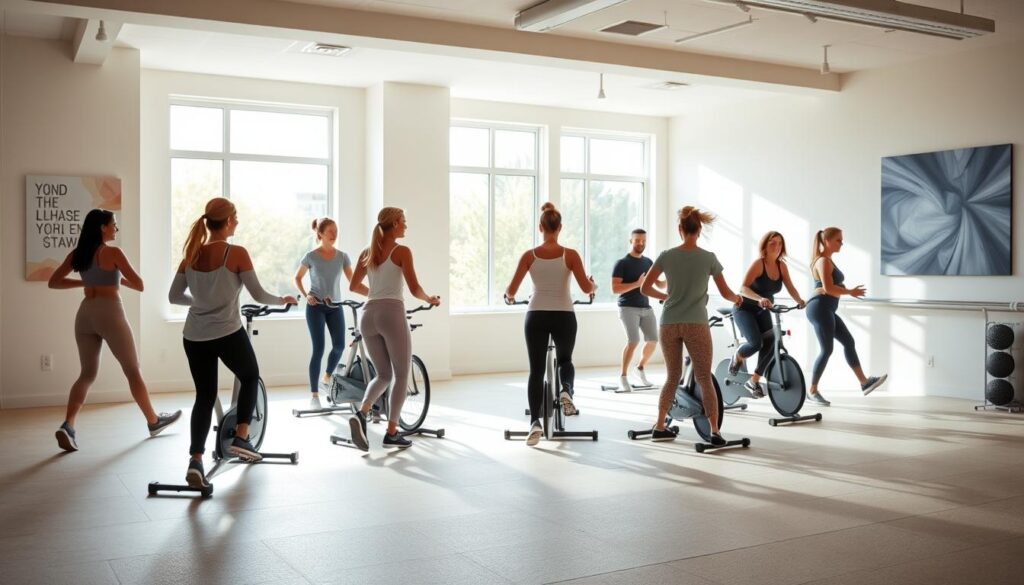
Cycling and stationary biking are excellent workouts for improving cardiovascular fitness without putting excessive strain on your joints. You can adjust the intensity by changing the resistance or incorporating sprints into your routine. As a form of training, cycling is versatile and can be done both indoors and outdoors.
To get the most out of these intermediate cardiovascular exercises, consider combining them into circuit workouts. This will not only keep your workouts interesting but also challenge your body in different ways. For example, you can create a circuit that includes jogging in place, stair climbing, and air squats. As you progress, you can increase the duration and intensity of your workouts to continue challenging yourself.
Advanced Cardiovascular Workouts for Maximum Results
To take your cardiovascular workouts to the next level, consider incorporating advanced exercises that challenge your body and boost your heart rate. These workouts are designed to push your limits and maximize your results, helping you achieve your fitness goals faster.
Jump Rope Variations
Incorporating jump rope into your cardio routine can be an effective way to improve your cardiovascular health. Try alternating between jumping with both feet and jumping from one foot to the other to maximize the cardiovascular benefit.
Burpees and Mountain Climbers
Burpees are an advanced full-body exercise that gets your heart pumping, while mountain climbers work your entire body, especially the lower portion. These exercises are great for improving your overall fitness and increasing your heart rate.
HIIT Cardio Circuits
HIIT (High-Intensity Interval Training) provides cardio benefits while also building strength, power, and agility. Design effective cardio circuits by incorporating a variety of exercises and minimizing rest periods.
Bear Crawls and Inchworms
Bear crawls and inchworms are advanced exercises that require proper form to prevent injury. Start with slower, controlled movements and gradually increase your speed as you build strength and endurance.
By incorporating these advanced exercises into your workouts and training routine, you can take your cardiovascular fitness to new heights and achieve maximum results.
Low-Impact Cardiovascular Workouts That Aren’t Running
If you’re looking for low-impact cardio options beyond running, there are several effective alternatives to improve your cardiovascular health. These exercises are particularly beneficial for individuals with joint issues or those who prefer lower-impact activities.
Swimming and Water Exercises
Swimming is an excellent low-impact cardio workout that’s gentle on your joints while providing heart-pumping benefits. A study found that 16 weeks of swimming three times a week improved participants’ cholesterol, blood sugar, blood pressure, and body fat percentage. You can try various water exercises like water aerobics or simply walking in the water to get your heart rate up.
Rowing Workouts
Rowing is another low-impact cardio option that engages multiple muscle groups, providing a comprehensive cardio and strength workout. It works your arms, legs, and core, making it an efficient full-body exercise. You can use a rowing machine at the gym or try rowing on the water.
Elliptical Training
Elliptical training is a low-impact cardio workout that simulates running without the high-impact stress on your joints. To maximize results, you can adjust the resistance and intensity of your workout. It’s also a great way to vary your workouts and avoid plateaus.
Modified Exercises for Joint Protection
For those with joint issues or injuries, modifying common exercises can help reduce stress while maintaining cardio benefits. For example, you can substitute high-impact exercises like jumping jacks with lower-impact alternatives like marching in place or cycling.
Creating an Effective Cardiovascular Workout Routine
Developing a well-structured cardiovascular workout routine is crucial for achieving optimal fitness and overall health. A well-crafted routine helps you stay motivated and ensures you’re targeting your heart and lungs effectively.
Balancing Intensity and Recovery
A balanced cardio routine involves alternating between high-intensity workouts and recovery days. This balance is key to avoiding overtraining and preventing injuries. For instance, a high-intensity day might involve jogging or cycling, while a recovery day could include light yoga or walking.
Combining Different Types of Cardio
Varying your workouts is essential to prevent plateaus and keep your routine interesting. You can combine running, swimming, and cycling to create a well-rounded workout routine. This variation also helps distribute the stress on your muscles and joints, reducing the risk of overuse injuries.
Progressive Overload for Continued Improvement
To continue improving your cardiovascular fitness, it’s essential to incorporate progressive overload into your training program. This can be achieved by gradually increasing the intensity or duration of your workouts over time. For example, you might add more intervals to your running routine or increase the resistance on your stationary bike.
By following these guidelines and tailoring your workout routine to your fitness goals, you can achieve significant improvements in your cardiovascular health and overall fitness.
Equipment-Free Cardiovascular Workouts for Home
You can achieve an effective cardio workout from the comfort of your own home without any equipment. Cardiovascular exercises can be adapted to various fitness levels, making it accessible for everyone to improve their heart rate and overall health.
Bodyweight Circuit Ideas
Bodyweight circuits are an excellent way to get your cardio workout done at home. You can perform exercises like burpees, jump squats, and mountain climbers for 45 seconds to 1 minute, followed by 30 seconds of rest. Then, move on to the next exercise, creating a circuit that keeps your heart rate up and burns calories.
Using Household Items for Resistance
To add variety and challenge to your workouts, you can use common household items as resistance. For example, water bottles can be used as dumbbells, and a chair can be used for support during squats or lunges. This approach not only adds resistance but also engages your body in different ways, enhancing the overall effectiveness of your exercises.






No comment