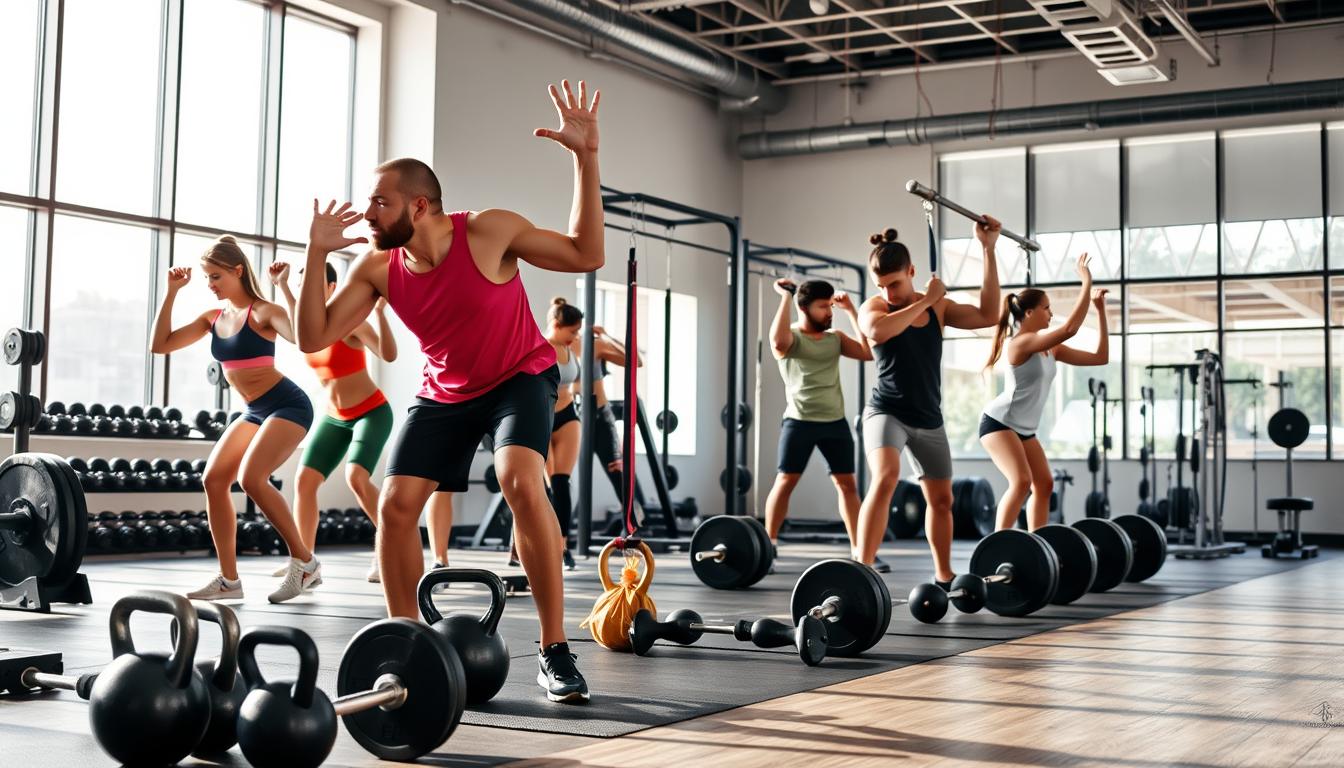
Are you looking to improve your overall strength and ability to perform daily tasks? Functional fitness exercises can help. By focusing on training that mimics everyday movements, you can enhance your overall physical performance.
This comprehensive approach to exercise integrates multiple muscle groups, making it more effective than traditional gym routines that isolate specific muscles. By incorporating functional fitness principles into your routine, you’ll be better equipped to handle daily activities with ease and improve your overall strength.
As you continue through this guide, you’ll discover how to implement functional training into your regimen, including specific exercises and equipment recommendations.
What Is Functional Fitness?
Functional fitness is more than just a workout routine; it’s a way to prepare your body for real-life movements and activities. This training methodology focuses on exercises that mimic everyday actions, helping you improve your ability to complete tasks with ease.
Definition and Core Principles
At its core, functional fitness is about engaging multiple muscle groups simultaneously through multi-joint movements. This approach improves coordination and practical strength, making daily activities less strenuous. The core principles revolve around:
- Exercises that mimic real-life actions
- Multi-joint movements that engage multiple muscles
- Improving coordination and practical strength
By focusing on these principles, functional fitness enhances your overall physical capability, making it an essential component of a well-rounded fitness regimen.
Functional vs. Traditional Strength Training
Unlike traditional strength training, which often isolates individual muscles, functional fitness emphasizes whole-body integration and movement patterns that translate directly to daily activities. While traditional strength training focuses on building muscle size or maximal strength, functional training prioritizes movement quality, balance, and coordination across multiple planes of motion.
Understanding the difference between functional fitness and traditional strength training is crucial for creating a workout routine that meets your needs. By incorporating functional fitness into your regimen, you can improve your overall fitness and enhance your ability to perform daily tasks.
The Science Behind Functional Fitness Workouts
The effectiveness of functional fitness lies in its scientific foundation, which is rooted in biomechanics and neuromuscular adaptation. This approach to exercise is designed to improve movement patterns used in everyday activities, making it a practical and efficient way to enhance your overall fitness.
How Functional Training Improves Daily Life
Functional training activates multiple muscle groups simultaneously, creating more efficient neural pathways and improving motor control for daily movements. This type of training enhances your ability to perform daily tasks with more ease and less risk of injury. By improving your functional strength, you can enjoy a more active lifestyle.
Research demonstrates that functional fitness workouts lead to improved proprioception (body awareness), which enhances balance, coordination, and reduces injury risk in daily activities. As you incorporate functional training into your routine, you’ll notice improvements in your overall physical capability and daily life.
The Role of Core Strength in Functional Fitness
Your core plays a crucial role in all daily movements, connecting everything and providing stability and power transfer between the upper and lower body during activities. A strong core is essential for maintaining proper posture and body alignment, making it a foundational element of functional fitness. By focusing on core strength, you can improve your overall functional ability and reduce the risk of injury.
As noted by fitness experts, “A weak core breaks your ‘chain’ of strength, coordination, balance, and posture.” Therefore, functional fitness workouts always address core strength, ensuring that your entire body works together efficiently.
Key Benefits of Functional Fitness
The benefits of functional fitness are multifaceted, ranging from improved mobility to reduced injury risk. By engaging in functional fitness training, you can experience significant enhancements in your overall physical ability and quality of life.
Improved Mobility and Range of Motion
Regular functional training significantly improves your mobility and range of motion by working your body through complete movement patterns. This type of training reduces stiffness and enhances your ability to perform daily tasks with ease. As a result, you can squat deeper, reach farther, and bend without experiencing back pain, thereby improving your overall quality of life.
Enhanced Balance and Coordination
Functional exercises challenge your body’s proprioceptive system and stabilizing muscles, leading to enhanced balance and coordination. This improvement makes you more surefooted in your everyday activities, reducing the risk of falls and injuries. With better balance, you can navigate your environment with more confidence and stability.
Reduced Risk of Injury
The multi-planar movements involved in functional fitness strengthen your supporting muscles and connective tissues. This comprehensive strengthening substantially reduces your risk of injury during both athletic endeavors and daily tasks. By enhancing your body’s resilience, functional fitness training helps you stay active and healthy.
Better Posture and Less Back Pain
Functional training strengthens your core and posterior chain while teaching you proper body alignment during movement. As a result, you can enjoy improved posture and reduced back pain. A strong core and good posture are key to alleviating back pain, allowing you to move more comfortably and maintain a healthy back.
By incorporating functional fitness into your workout routine, you can reap these benefits and enhance your overall physical fitness and well-being. Whether you’re looking to improve your athletic performance or simply want to be more capable in your daily life, functional fitness training is an effective and beneficial approach.
Essential Equipment for Functional Fitness Workouts
Effective functional fitness workouts rely on a select range of equipment designed to challenge your body in various ways. The beauty of functional fitness lies in its ability to improve your overall fitness using minimal, yet effective tools.
Kettlebells and Their Versatility
Kettlebells stand out as versatile tools for functional training. Their offset center of gravity forces your body to stabilize during movements, engaging your core and improving overall fitness. You can use kettlebells for swings, squats, presses, and more, making them a staple in any functional fitness workout.
Sandbags for Shifting Weight Training
Sandbag training is a cornerstone of functional fitness. You can build an entire home gym just with sandbags. Sandbags are great because they’re basically indestructible, allowing you to safely toss, haul, drag, and drop them. This shifting weight distribution mimics real-world objects and challenges your body to adapt constantly during exercises.
Minimal Equipment Options
For those seeking minimal equipment options, resistance bands, suspension trainers, and your own bodyweight can provide effective functional fitness workouts without significant investment. These tools create instability and variable resistance, forcing your body to engage stabilizing muscles that might be neglected in traditional machine-based training.
By incorporating these essential equipment pieces into your functional fitness routine, you’ll be able to enhance your workouts, improve your overall fitness, and achieve your training goals.
10 Fundamental Functional Fitness Exercises
Building a strong foundation in functional fitness requires a deep understanding of the most effective exercises that target various aspects of physical fitness. These exercises are designed to improve your overall strength, mobility, and coordination, making daily activities easier and reducing the risk of injury.
Bodyweight Movements
Bodyweight exercises are a crucial part of any functional fitness program. They help improve strength, flexibility, and mobility without the need for any equipment. You can perform these exercises anywhere, making them ideal for individuals who prefer working out at home or while traveling.
Squats and Lunges
Squats and lunges are fundamental bodyweight exercises that target your lower body strength. Squats primarily work the quadriceps and gluteus maximus, while lunges focus on the quadriceps, hamstrings, and glutes. Mastering proper form in these exercises will enhance your mobility and balance, making daily activities like climbing stairs or getting up from a seated position much easier.
Planks and Core Stabilizers
Planks and other core stabilizers are essential for building core strength, which is critical for maintaining proper alignment during various physical activities. By engaging your core, you improve your overall stability and reduce the risk of injury. Holding a plank position with your hands on the floor and your body in a straight line from head to heels is an effective way to strengthen your core.
Push-Ups and Pull-Ups
Push-ups and pull-ups are upper body exercises that develop pushing and pulling strength. Push-ups target the chest, shoulders, and triceps, while pull-ups work the back, shoulders, and arms. These exercises translate directly to everyday tasks like moving furniture or lifting objects onto shelves, making them invaluable for improving functional fitness.
Weighted Exercises
Incorporating weighted exercises into your functional fitness routine adds variety and challenge, helping to improve strength and endurance. Weighted exercises like kettlebell swings, deadlifts, and farmer’s carries target multiple muscle groups and enhance overall physical fitness.
Kettlebell Swings and Deadlifts
Kettlebell swings and deadlifts are high-intensity exercises that work multiple muscle groups simultaneously. Kettlebell swings engage the posterior chain, including the back, glutes, and hamstrings, while deadlifts target the entire lower body and back. These exercises improve hip-hinging movements, protecting your back during lifting activities and enhancing overall strength.
Farmer’s Carries and Loaded Carries
Farmer’s carries and other loaded carries build grip strength, core stability, and overall body tension. By carrying heavy objects over distances, you improve your ability to perform daily tasks that require carrying or moving heavy items. This exercise also enhances overall body strength and coordination.
Overhead Presses
Overhead presses develop shoulder stability and strength, essential for reaching and lifting objects above head height. This exercise targets the shoulders, triceps, and upper back, improving overall upper body strength and functionality.
Building a Functional Fitness Workout Routine
When designing your functional fitness routine, it’s essential to balance different aspects of training. A well-structured workout is crucial for achieving your fitness goals and ensuring that you’re using your time effectively.
Structuring Your Workout
A well-designed functional workout typically includes a proper warm-up with dynamic movements, a skill/strength component, a metabolic conditioning section, and a cool-down period. This structure helps ensure that you’re working on different aspects of your fitness, including strength, mobility, and cardiovascular health. For example, you might start with a dynamic warm-up that includes movements like leg swings and arm circles, followed by a strength component that focuses on exercises like squats and lunges.
- Begin with a dynamic warm-up to prepare your muscles and joints.
- Include a skill or strength component that challenges your body in different ways.
- Add a metabolic conditioning section to improve your cardiovascular fitness.
- Finish with a cool-down period to help your body recover.
Progression and Scaling
Progression is essential in functional fitness, as it allows you to continue challenging yourself and making gains in your fitness journey. This can involve mastering basic movement patterns before adding complexity, speed, or additional weight to exercises. Scaling options should be available for all exercises to accommodate different fitness levels and allow for continued progress without compromising form or safety.
- Master the basic movement patterns before progressing to more complex exercises.
- Increase the intensity or difficulty of exercises as you become more comfortable.
- Scale exercises to suit your fitness level, ensuring that you can maintain proper form.
Recovery Considerations
Recovery is a crucial aspect of functional fitness programming, as the full-body nature of the workouts can be demanding on multiple systems. It’s essential to allow for adequate rest between training sessions to prevent overtraining and ensure that your body can recover. Alternating between higher and lower intensity days can help maintain consistency in your functional fitness practice while minimizing the risk of overtraining.
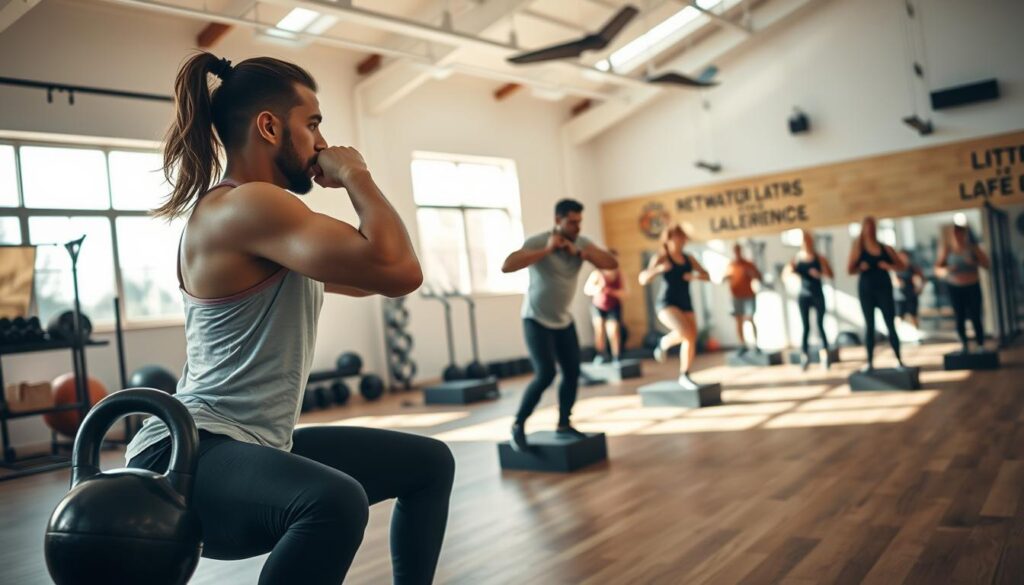
A sustainable functional fitness routine typically includes 3-5 workouts per week, with varied focuses to ensure comprehensive development of all physical capacities. By balancing structure, progression, and recovery, you can create a workout routine that supports your overall fitness goals and helps you achieve long-term success in your functional fitness journey.
Sample Functional Fitness Workouts
Let’s dive into some practical examples of functional fitness workouts that you can incorporate into your routine. These workouts are designed to be scalable and adaptable to your fitness level and available equipment.
Beginner Routine
For beginners, it’s essential to start with bodyweight exercises that focus on mastering fundamental movement patterns. A sample beginner routine could include:
- Squats: 3 sets of 10 reps
- Push-ups: 3 sets of 8 reps
- Lunges: 3 sets of 10 reps (per leg)
- Plank: 3 sets, holding for 30 seconds each
This routine helps build a foundation of functional strength and improves overall mobility.
Intermediate Circuit
For those at an intermediate level, a circuit that combines strength and conditioning can be highly effective. An example intermediate circuit might include:
- Dumbbell squats: 3 sets of 12 reps
- Box jumps: 3 sets of 10 reps
- Push-ups with claps: 3 sets of 12 reps
- Mountain climbers: 3 sets of 20 reps
This circuit is designed to be completed with minimal rest between exercises, enhancing your fitness and endurance.
Advanced Functional Training
Advanced trainees can benefit from more complex movements and higher intensity intervals. A sample advanced workout could involve:
- Olympic lifts: 3 sets of 8 reps
- Burpees: 3 sets of 15 reps
- Box jumps with weights: 3 sets of 12 reps
- Pull-ups: 3 sets to failure
This advanced training challenges all aspects of your functional fitness, pushing your limits and enhancing your overall strength and agility.
These sample workouts demonstrate how functional fitness training can be tailored to different fitness levels and goals, providing a comprehensive approach to improving your overall fitness and well-being.
Functional Fitness for Specific Goals
Functional fitness is a versatile training method that can be tailored to achieve a wide range of specific goals. Whether you’re looking to enhance your athletic performance, improve your everyday functionality, or rehabilitate from an injury, functional fitness can be adapted to meet your needs.
Enhancing Athletic Performance
For athletes, functional training develops sport-specific movement patterns and improves power transfer between muscle groups, resulting in better performance and reduced injury risk. By focusing on exercises that mimic the movements of your sport, you can enhance your overall athletic ability and gain a competitive edge.
Improving Everyday Functionality
Everyday functionality improves dramatically through functional fitness by strengthening the exact movement patterns used in daily activities like lifting groceries, climbing stairs, or playing with children. This type of training helps you perform daily tasks with more efficiency and less strain on your body.
Rehabilitation and Injury Prevention
Rehabilitation programs increasingly incorporate functional fitness principles to restore not just isolated muscle strength but complete movement patterns and neuromuscular coordination. By emphasizing balanced muscle development, proper movement mechanics, and core stability, functional training can help prevent injuries and support the rehabilitation process.
To achieve your specific goals, it’s essential to identify the key movement patterns relevant to your objective and progressively train those patterns under appropriate loads and conditions. Working with qualified professionals can help design targeted functional fitness programs for specific rehabilitation needs or athletic performance goals.
Combining Functional Fitness with Other Training Styles
To achieve a well-rounded fitness level, consider integrating functional fitness with other exercise routines. This approach allows you to capitalize on the benefits of different training modalities, leading to enhanced overall fitness and performance.
Cardio Integration
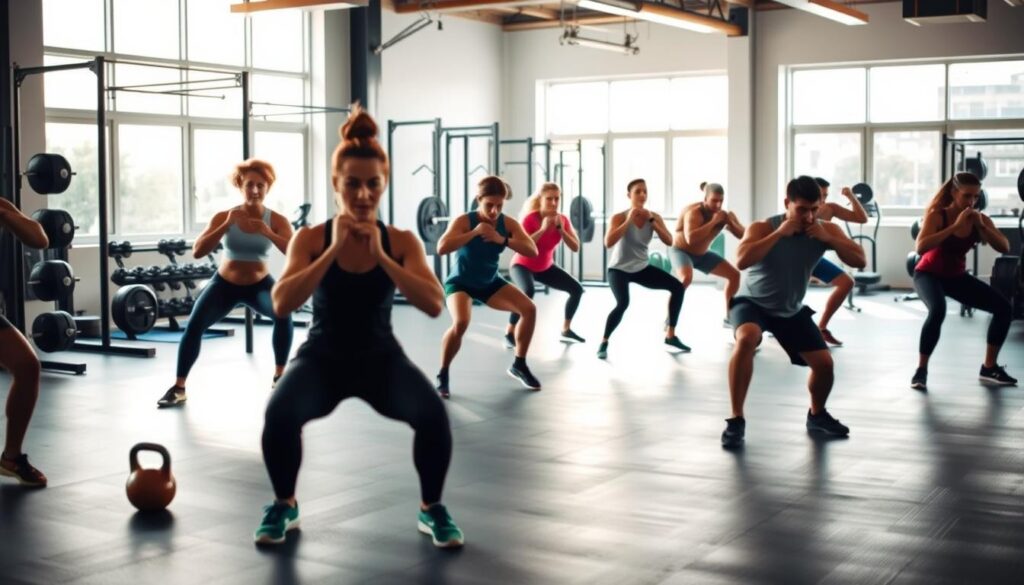
Integrating functional fitness with traditional cardio activities creates efficient workouts that develop cardiovascular endurance while building functional strength and movement quality. You can combine functional movements with steady-state cardio through circuit training, where strength exercises are performed between cardio intervals.
Traditional Strength Training
Traditional strength training can complement functional fitness by building the base strength needed for more challenging functional movements. A balanced approach might include days focused on strength training for specific muscle groups and separate days dedicated to functional movement patterns. The key to successful integration is ensuring that traditional training doesn’t create muscle imbalances or movement restrictions that could hinder functional performance.
By combining different training styles, you can achieve a more comprehensive level of fitness and enhance your overall workout experience.
Getting Started with Functional Fitness Today
The journey to functional fitness begins with understanding the importance of proper form and technique in your workouts. To achieve this, consider working with a qualified coach who can guide you through full-body, functional movements and ensure you’re engaging the right muscles and positioning the weight correctly.
Key Principles for a Successful Start:
- Master basic movement patterns like the squat, hinge, push, pull, and carry without added weight before progressing to more challenging variations.
- Invest in versatile equipment like kettlebells, resistance bands, or sandbags that allow for a wide range of functional exercises.
- Start with 2-3 functional fitness sessions per week, allowing your body to adapt to the new movement patterns and recover properly between workouts.
Focus on quality of movement over quantity of repetitions or weight, as proper form is essential for both safety and effectiveness in functional training. Track your progress not just in terms of weight lifted or repetitions completed, but also in movement quality, recovery time, and how daily activities feel outside the gym.
By following these guidelines and maintaining a consistent workout routine, you can unlock the full benefits of functional fitness and improve your overall health and well-being.


No comment